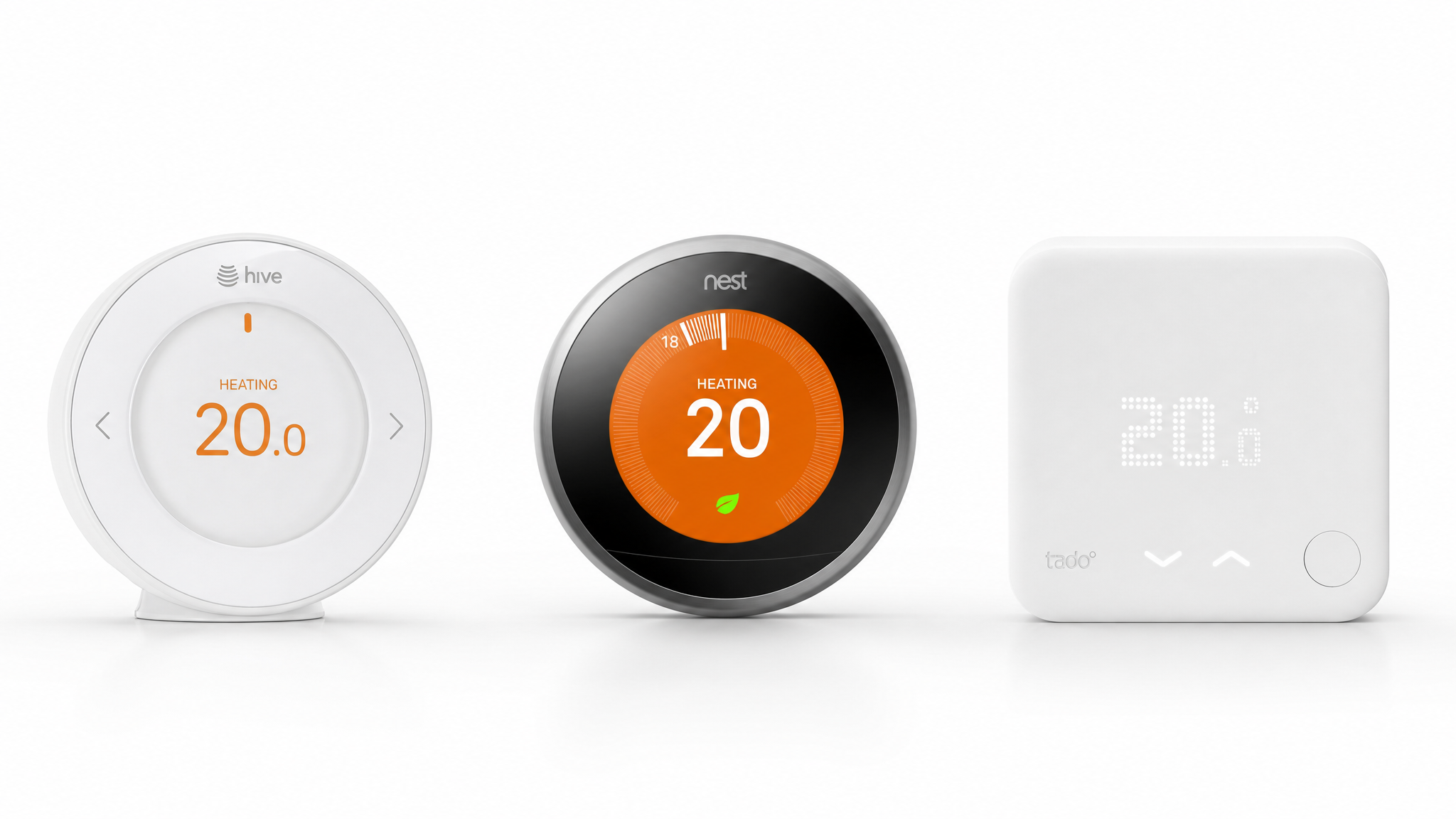
Picking a smart thermostat sounds simple until you start comparing specs and realise every brand claims to be the best. Hive says it's the easiest. Tado says it saves the most energy. Nest says it learns your habits so you don't have to think about it. They can't all be right — so which one actually delivers for UK homes?
I've dug into all three properly, looking at real-world energy savings, subscription costs, smart home compatibility, and how painful the installation actually is. Here's the honest breakdown.
Check Your Boiler Before You Buy Anything
Seriously — before you spend £150–£250 on a smart thermostat, find out whether your boiler supports OpenTherm. This is a communication protocol that lets a thermostat modulate your boiler's output, running it at 60% power instead of slamming it on and off at full blast.
Both Tado and Nest support OpenTherm; Hive typically operates on a simple on/off relay. That distinction matters more than most people realise. A modern condensing boiler running at modulated output is noticeably more efficient than one cycling on and off all day.
If you have an older system or a basic combi without OpenTherm, the gap narrows — but it's still worth knowing before you hand over your money.
Hive: Reliable, British, and Refreshingly Uncomplicated
Hive is made by British Gas, and that heritage shows in everything from the packaging to the support line. It's designed to be installed by a British Gas engineer, backed by a UK call centre, and it just works without much fuss. Not glamorous, but genuinely useful.
What Hive Gets Right
The app is clean and to the point. Set schedules, boost the heating for an hour, check whether you left it on from the office — all straightforward. The Hive Hub connects via your broadband router rather than relying on Wi-Fi reaching the thermostat, which is a small but practical win in older UK homes with thick stone or brick walls.
The bigger deal: Hive doesn't lock core features behind a subscription. Scheduling, remote control, and basic usage reports are all free. There's an optional Hive+ plan for more detailed energy insights, but most people won't miss it.
Where Hive Lets You Down
It doesn't have the smarter efficiency features that Tado and Nest offer. No geofencing that automatically dials back the heating when you leave (unless you pay), no open-window detection, no weather compensation. Apple HomeKit isn't supported either, which rules it out if you're building around that ecosystem.
Best for: Anyone who wants a reliable, professionally installed thermostat with no ongoing costs and proper UK support behind it.
Nest: The One That Actually Learns
Google's Nest Learning Thermostat has been around long enough to have a genuine track record — this isn't vaporware. The 4th generation model added Matter and Thread support, which is a meaningful upgrade for anyone thinking about long-term compatibility. It works with Google Home natively and plays nicely with Alexa too, though the Google integration is tighter.
What Nest Gets Right
The auto-schedule feature is the headline act, and it earns it. For the first week, you adjust the temperature as you normally would. Nest watches your patterns and builds a schedule around them. After that, you barely touch it. Google claims savings of around 10–12% on heating bills, and independent testing broadly backs that up.
The display is also the nicest of the three — a large circular screen that shows current and target temperatures, dims when you're not looking at it, and just looks good on a wall. It feels premium in a way that Hive and Tado don't quite match.
Where Nest Lets You Down
Installation can get complicated on older UK heating systems, and Google has been quietly pulling back from new hardware launches in Europe. That's not a reason to avoid it today, but it's worth keeping in mind if you're planning for the next five years. No Apple HomeKit support either.
Best for: Google ecosystem households who want a thermostat that handles itself with minimal input.
Tado: The One for Energy Nerds (in the Best Way)
Tado is where energy-conscious homeowners tend to end up, and the reasons are pretty clear. It has the most sophisticated efficiency features of the three, and it's the only mainstream option with native Apple HomeKit support alongside Alexa, Google Assistant, and Matter.
What Tado Gets Right
Geofencing works well — the system detects when the last person leaves home and starts winding down the temperature automatically. Open-window detection spots a sudden temperature drop and pauses heating when you've cracked a window. Weather adaptation tweaks your schedule based on the outdoor forecast. None of these are gimmicks; they add up to real savings across a heating season.
Tado also supports smart radiator valves (TRVs) for room-by-room control. If you want different temperatures in different rooms without a full multi-zone system, Tado's TRVs are the most practical route there — and they're genuinely good.
Where Tado Lets You Down
The subscription model is the sticking point. The core app is free, but the best features — geofencing, open-window detection, weather adaptation — sit behind the Auto-Assist subscription at around £3.99/month or £29.99/year. That's not a dealbreaker, but it's an ongoing cost that Hive and Nest don't charge for comparable features.
DIY installation is well-guided through the app, but if you're not comfortable with wiring, budget for a professional visit.
Best for: Energy-focused households, Apple HomeKit users, and anyone who wants proper room-by-room control with TRVs.
Side-by-Side: The Quick Reference
| Feature | Hive | Nest (4th Gen) | Tado |
|---|---|---|---|
| OpenTherm Support | Limited | Yes | Yes |
| Geofencing | Paid plan only | Free (Home/Away Assist) | Paid plan only |
| Apple HomeKit | No | No | Yes |
| Matter Support | No | Yes | Yes (Tado X) |
| Monthly Subscription | Optional | None | Required for best features |
| Smart TRVs Available | Yes | No | Yes (best in class) |
| Professional Install | Easy (British Gas) | Can be complex | DIY-friendly |
So Which One Should You Buy?
Here's the short version:
- Want the simplest setup with proper UK support? Hive. Reliable, no subscription required, and British Gas will sort the install.
- Deep in the Google ecosystem and want a thermostat that manages itself? Nest. The learning feature genuinely works, and Matter support keeps it future-proof.
- Serious about energy savings, using Apple HomeKit, or want room-by-room control? Tado. Factor in the Auto-Assist subscription, but the efficiency gains usually cover it.
All three will save you more money than a traditional programmable thermostat — mostly because they make it easy to actually use your heating system properly rather than leaving it on a fixed schedule from 2019. The best one is whichever you'll actually engage with.
Tried any of these? Drop a comment below — especially if you've switched between them. And if this comparison saved you some research time, share it with someone who's been putting off upgrading their heating controls.


