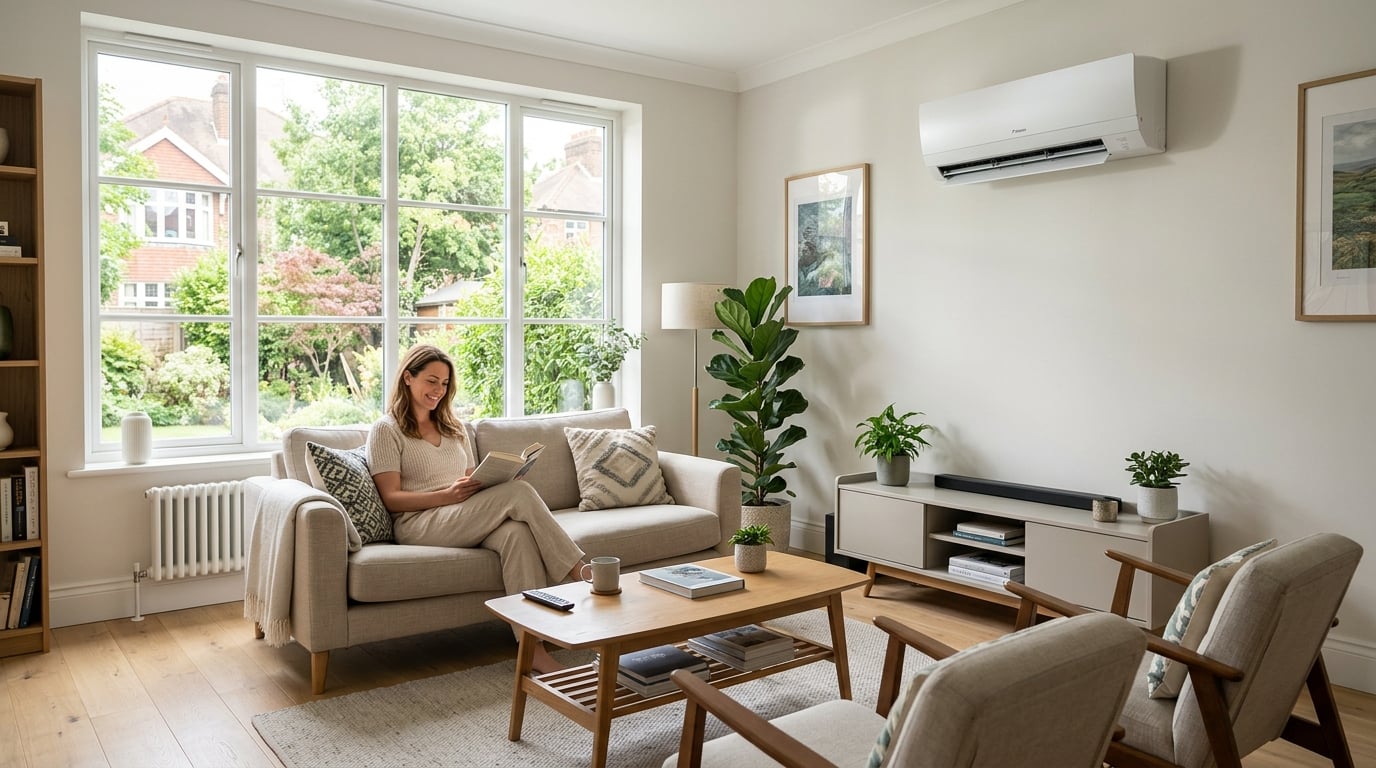
Why Air Conditioning Is No Longer a Luxury in the UK
For decades, air conditioning was considered an unnecessary extravagance in British homes. The UK's temperate climate meant that a decent electric fan was usually enough to get through the occasional warm spell. That assumption no longer holds. The summer of 2025 saw multiple heatwaves sweep across the country, with temperatures in London reaching 34.7°C and an estimated 260 heat-related deaths in the capital alone. Demand for air conditioning surged by 23% compared to the same period in 2024, and major retailers including Currys, John Lewis, and Argos repeatedly sold out of portable units within hours of restocking.
Whether you are a homeowner looking for a permanent solution or a renter seeking something you can take with you when you move, there is now a wide range of cooling options available in the UK market. This guide breaks down every major category, with current GBP pricing, top model recommendations, and honest advice on what will actually work in a British home.
Understanding Cooling Capacity: What Is a BTU?
Before diving into specific products, it helps to understand how cooling power is measured. Air conditioners are rated in British Thermal Units per hour (BTU/h). The higher the BTU rating, the more powerful the unit and the larger the space it can cool effectively.
- Up to 15–20 m² (small bedroom or home office): 7,000–9,000 BTU
- 20–30 m² (medium bedroom or living room): 9,000–12,000 BTU
- 30–40 m² (large open-plan room): 12,000–14,000 BTU
Always measure your room before buying. An undersized unit will run constantly without ever reaching a comfortable temperature, wasting electricity and wearing out the compressor prematurely.
Option 1: Portable Air Conditioners
Portable air conditioners are the most popular choice for UK renters and homeowners who want a flexible, no-installation-required solution. They sit on castors, plug into a standard 13-amp socket, and vent hot air outside via an exhaust hose that fits through a window.
How They Work
A portable air conditioner draws warm room air over a refrigerant-cooled evaporator coil, blows the chilled air back into the room, and expels the extracted heat through the exhaust hose. Unlike a fan, which simply moves air around, a portable AC unit actively lowers the ambient temperature. Most modern units also include a dehumidifier mode, which is particularly useful on the muggy, humid nights that often accompany UK heatwaves.
Top Portable Air Conditioner Models for 2025
| Model | Capacity | Price (approx.) | Best For |
|---|---|---|---|
| MeacoCool MC Series Pro 9000 | 9,000 BTU | £400 | Bedrooms & home offices |
| Pro Breeze 9000 BTU Smart | 9,000 BTU | £400 | Smart home integration |
| De'Longhi Pinguino PAC EL112 | 11,000 BTU | £650 | Premium performance, larger rooms |
| Meaco Pro 16000 BTU | 16,000 BTU | £580 | Large open-plan spaces |
| Homcom 7000 BTU | 7,000 BTU | £177 | Budget buyers, small rooms |
MeacoCool MC Series Pro 9000 — Editor's Pick
The MeacoCool MC Series Pro 9000 (around £400 from Currys and Amazon UK) is widely regarded as the best all-round portable air conditioner for UK homes. It features Wi-Fi connectivity, allowing you to control it via a smartphone app or through Amazon Alexa and Google Home voice commands. The self-evaporating design means you rarely need to empty a water tank, and its noise level of around 52 dB makes it acceptable for bedroom use. For a medium-sized bedroom or home office, it is hard to beat.
Pro Breeze 9000 BTU Smart — Best Buy Award Winner
The Pro Breeze 9000 BTU Smart (approximately £400, available from Amazon UK and Argos) has earned Best Buy status from several independent testing organisations. It supports Alexa and Google Home integration, making it a natural fit for smart home setups. Its cooling performance is reliable, and the included window kit covers most standard UK casement windows.
De'Longhi Pinguino PAC EL112 — Premium Choice
If budget is less of a concern, the De'Longhi Pinguino PAC EL112 (around £650 from John Lewis and Currys) is the most sophisticated portable unit on the UK market. It carries an A+ energy rating and features De'Longhi's proprietary Real Feel technology, which manages both temperature and humidity simultaneously. The result is a more comfortable environment than raw temperature figures alone would suggest. It is best suited to larger rooms of 25–35 m².
Running Costs
Under the current Ofgem energy price cap (approximately 24.67p per kWh as of mid-2025), a typical portable air conditioner costs between 19p and 39p per hour to run. Because the compressor cycles on and off once the target temperature is reached, real-world seasonal costs are often 20–40% lower than the theoretical maximum. Running a 9,000 BTU unit for four hours per evening over a two-week heatwave would cost roughly £10–£20 in electricity — a reasonable price for a comfortable night's sleep.
The Window Kit Problem
One of the most common complaints about portable air conditioners in the UK is that the included window kits do not fit British windows. UK homes typically feature casement (outward-opening) or tilt-and-turn windows, which are incompatible with the rigid sliding panels supplied with many units. If the exhaust hose is not properly sealed, hot air flows back into the room and the unit has to work much harder, wasting electricity and failing to cool effectively.
The best solution is a fabric seal kit, which attaches to the window frame with adhesive Velcro and has a zippered opening for the hose. These are available from Amazon UK for around £15–£30 and fit most hinged and tilt-and-turn windows. Alternatively, many users cut a custom panel from insulation board or plywood to fill the window opening precisely. Whatever approach you take, seal any remaining gaps with foam draught-excluder tape.
Portable Air Conditioner: Pros and Cons
- Pros: No installation required; portable between rooms; suitable for renters; available from £177; smart home compatible models available
- Cons: Less efficient than split systems; exhaust hose required; window kit compatibility issues with UK windows; can be noisy (50–65 dB); bulky and heavy (often 25 kg+)
Option 2: Split System Air Conditioning
A split system (also called a mini-split or wall-mounted air conditioner) consists of two units: an indoor wall-mounted unit that blows cool air into the room, and an outdoor condenser unit that expels the extracted heat. The two are connected by refrigerant pipes that pass through a small hole in the wall. Split systems are significantly more efficient and quieter than portable units, and they are the preferred choice for homeowners who want a permanent, high-performance solution.
Installation Requirements and Costs
All split system installations in the UK must be carried out by an F-Gas certified engineer — this is a legal requirement under UK refrigerant handling regulations. Using an uncertified installer is illegal and will void the manufacturer's warranty. Always ask to see an engineer's F-Gas certificate before work begins.
Typical installed costs for a single-room split system in 2025 are as follows:
- Single-room split system: £1,200–£3,500 (supply and installation)
- Multi-split system (2–3 rooms, one outdoor unit): £3,500–£6,500
- Whole-home ducted system: £5,000–£15,000+
- Annual servicing: £70–£120 per indoor unit
Additional costs can arise if a dedicated electrical circuit is required (£150–£700) or if the installation involves difficult access such as working at height (£200–£1,000 extra). Labour rates are typically higher in London and the South East than in other parts of the UK.
Top Split System Brands Available in the UK
Daikin
Daikin is widely considered the gold standard for residential split systems in the UK. The Daikin Comfora series starts at around £580–£1,060 for the unit alone (excluding installation), while the more efficient Perfera series — which achieves a Seasonal Coefficient of Performance (SCOP) of 5.1 for heating — ranges from approximately £775 to £1,850. Daikin offers a seven-year parts and labour warranty when the system is registered, which is the best in the industry. The Daikin Onecta app provides detailed energy monitoring and smart scheduling. Daikin systems are available through authorised installers across the UK.
Mitsubishi Electric
Mitsubishi Electric is another premium brand with an excellent reputation for reliability and quiet operation. Their M-Series and MSZ-AP range are popular choices for UK homes, with indoor units operating as quietly as 19 dB on their lowest fan setting — virtually silent. Mitsubishi Electric offers a five-year warranty and their MELCloud app provides smart home integration. Supply-only prices are broadly comparable to Daikin, with installed costs typically falling in the £1,500–£3,000 range for a single room.
Samsung and LG
Samsung and LG offer more affordable split system options, with installed costs often coming in at the lower end of the £1,200–£2,500 range. Both brands offer Wi-Fi connectivity and compatibility with their respective smart home ecosystems (SmartThings for Samsung, ThinQ for LG). While not quite matching Daikin or Mitsubishi Electric for efficiency ratings, they represent excellent value for homeowners on a tighter budget.
Heat Pump Functionality
One of the most compelling reasons to invest in a split system is that virtually all modern units are reversible heat pumps. In winter, they can extract heat from the outside air and pump it indoors, providing efficient heating as well as cooling. A modern inverter-driven split system can deliver three to five units of heat energy for every unit of electricity consumed — making it significantly cheaper to run than a gas boiler or electric resistance heater for many households.
Split System: Pros and Cons
- Pros: Most efficient cooling method; very quiet; no exhaust hose; also functions as a heat pump in winter; permanent and discreet installation; suitable for larger spaces
- Cons: Requires professional F-Gas certified installation; higher upfront cost (£1,200–£3,500+); outdoor unit may require planning permission in some areas; not suitable for renters without landlord consent
Option 3: Evaporative Coolers (Air Coolers)
Evaporative coolers — sometimes called swamp coolers or air coolers — work on a completely different principle to refrigerant-based air conditioners. They draw warm air through water-soaked pads or over ice packs, cooling it through evaporation before blowing it into the room. They require no exhaust hose, no professional installation, and consume a fraction of the electricity of a compressor-based unit.
Do They Actually Work in the UK?
This is the key question. Evaporative coolers are most effective in hot, dry conditions. In low humidity, they can reduce room temperatures by 3–8°C. However, their performance drops significantly in high humidity — and UK summers, particularly during heatwaves, are often humid as well as hot. On a dry, sunny afternoon they can provide meaningful relief; on a muggy, overcast evening they may add unwanted moisture to the air without much cooling effect.
For this reason, evaporative coolers are best thought of as a supplement to other cooling strategies rather than a standalone solution. They work well in combination with good ventilation — opening windows at night to flush out warm air, then closing them in the morning and running the cooler during the hottest part of the day.
Top Evaporative Cooler Models for 2025
| Model | Tank Size | Price (approx.) | Best For |
|---|---|---|---|
| Swan Nordic Air Cooler | 7L | £80–£120 | Best overall; quiet and stylish |
| Dreo TurboCool 765S | 6L | £100–£150 | Powerful cooling, very quiet |
| Symphony Diet 3D 20i | 20L | £130–£180 | Large rooms, fastest cooling |
| JML Chillmax Air Tower Plus | 3L | £50–£70 | Budget buyers, small spaces |
The Swan Nordic Air Cooler (available from John Lewis and Amazon UK for around £80–£120) is the most consistently recommended model for UK homes. It operates at just 26W on its highest setting — costing only pennies per hour to run — and its 40 dB noise level makes it suitable for bedroom use. The Dreo TurboCool 765S is a step up in performance, capable of reducing room temperatures by up to 3°C in dry conditions, and operates as quietly as 20 dB on lower fan speeds.
Evaporative Cooler: Pros and Cons
- Pros: Very cheap to buy (from £50) and run (pennies per hour); no installation or exhaust hose required; adds moisture to dry air; quiet operation; suitable for renters
- Cons: Significantly less effective in humid conditions; adds moisture to the air (unsuitable for damp rooms); requires regular tank refilling and pad cleaning; not a substitute for air conditioning in extreme heat
Option 4: Whole-Home and Ducted Systems
For larger properties or those seeking a completely invisible cooling solution, ducted air conditioning systems distribute conditioned air through concealed ductwork in the ceiling or walls. A single outdoor unit connects to multiple indoor vents throughout the home, providing consistent cooling across every room. These systems are the most expensive option, typically costing between £5,000 and £15,000 or more depending on the size of the property and the complexity of the installation. They are most commonly installed during new builds or major renovations when access to ceiling voids is straightforward.
Which Option Is Right for You?
| Situation | Recommended Option | Typical Cost |
|---|---|---|
| Renter, one room, tight budget | Evaporative cooler | £50–£180 |
| Renter or homeowner, one room, reliable cooling | Portable air conditioner | £177–£650 |
| Homeowner, one room, permanent solution | Single-room split system | £1,200–£3,500 |
| Homeowner, multiple rooms | Multi-split system | £3,500–£6,500 |
| New build or major renovation | Ducted whole-home system | £5,000–£15,000+ |
Smart Home Integration
If you are building a smart home, it is worth prioritising air conditioning units with robust smart home integration. The best portable units — including the MeacoCool MC Series Pro 9000 and the Pro Breeze 9000 BTU Smart — support Amazon Alexa and Google Home, allowing you to control temperature by voice or automate cooling schedules through your smart home hub. Split systems from Daikin (via the Onecta app) and Mitsubishi Electric (via MELCloud) offer detailed energy monitoring alongside scheduling and remote control. Samsung's SmartThings ecosystem integrates natively with Samsung split systems, making them a natural choice if you already use SmartThings devices throughout your home.
Where to Buy
During heatwaves, stock of portable air conditioners sells out rapidly at major UK retailers. Currys, John Lewis, Argos, and Amazon UK are the primary destinations, but Appliances Direct is worth checking when high-street retailers are depleted. For split systems, you will need to source the unit through an authorised installer — most reputable installers supply the equipment as part of the installation package, which also protects your warranty. Screwfix and Toolstation stock some portable units and accessories such as window kits and foam sealing tape.
Final Thoughts
The days of dismissing air conditioning as an unnecessary luxury in the UK are firmly behind us. Whether you opt for a budget evaporative cooler, a mid-range portable unit, or a premium split system installation, investing in home cooling is increasingly a matter of health and comfort rather than indulgence. For most renters and those cooling a single room, a quality portable air conditioner in the £350–£650 range — properly sealed to the window — will deliver reliable results. Homeowners with the budget and the intention to stay put for several years will find that a split system pays for itself in comfort, efficiency, and year-round heating capability. Whatever you choose, act early: when the next heatwave arrives, the shelves will empty fast.


